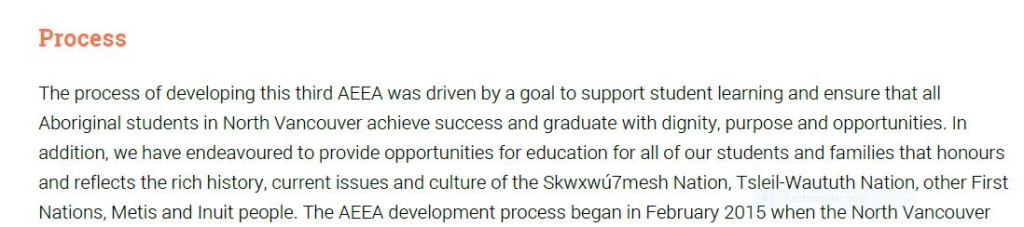
Recently I have been struggling with the negative media perception of the solidarity blockades supporting the right to self-determination of the Wet’suwet’en First Nation. What struck me related to this policy comes from the process section which emphasizes the goals of this document which states “In addition, we have endeavoured to provide opportunities for education for all of our students and families that honours and reflects the rich history, current issues and culture of First Nations, Metis and Inuit people”. This section speaks to the larger Canadian issues of engaging in a more equitable relationship with Indigenous communities. While I find that the goal identified in the process section of this document has tremendous value, we have clearly failed Indigenous people in this regard. Unfortunately I feel like the majority of Canadians do not understand the history of discrimination and genocide experienced by Indigenous people in this country and how it has shaped their current realities.
I have spent this week reading articles both locally and nationally that continually reference “The rule of law”. That these illegal blockades must be taken down as they violate the rule of law and are hurting the economic prosperity of every day Canadians. Where is the rule of law for Indigenous women and girls who are disproportionately represented in murders and missing persons statistics? Where was the rule of law when Indigenous children were taken from their families and forced into foster care or adoption during the 60’s scoop? The simple answer to these questions is that when the dominant majority experiences negative impacts to their financial realities the rule of law is quick to act. When those who have been consistently exploited since the creation of our country need the rule of law, it is nowhere to be found.
This is where educational policy can make a real difference. We must use the goals found in the North Vancouver Aboriginal Enhancement Act to create understanding and solidarity between Canadians and First Nations. Indigenous education policy should be centered around all students valuing the spiritual and sacred emphasis that Indigenous people place on the land and the interconnected nature of the environment as a form of identity. We must look to our schools to model discourse where Indigenous perspectives are valued and understood against the backdrop of historical acts of injustice and discrimination. Hopefully we can use our education system as a beacon of tolerance and cooperation that changes the division we currently are witnessing in our country.
 PME 821 Professional Connections Journal